Cart
0
Introduction:
Small spaces present unique challenges: how do you fit everything you need without feeling cramped? How do you make rooms feel larger than they are? How do you maintain style without creating clutter? The good news: small space design has been perfected by urbanites, tiny home enthusiasts, and professional designers working within tight constraints. These proven strategies help you maximize every inch while creating spaces that feel open, functional, and uniquely yours.
Body Content:
The Mindset Shift: Less Is More (Really)
The biggest mistake in small spaces is trying to fit everything in. Instead, be ruthlessly selective. Every piece must earn its place by being beautiful, functional, or ideally both. This doesn't mean sterile minimalism—it means intention over accumulation.
Furniture That Works Harder
Multi-Functional Pieces
In small spaces, furniture that serves multiple purposes is gold:
- Storage Ottomans: Seating, storage, and coffee tables in one
- Sofa Beds or Daybeds: Living space by day, guest bed by night
- Nesting Tables: Multiple surfaces when needed, tuck away when not
- Lift-Top Coffee Tables: Storage inside, adjustable surface height
- Wall-Mounted Drop-Leaf Tables: Dining table that folds flat against wall
Scale Appropriately
Counterintuitively, one large piece often works better than several small pieces. A substantial sofa anchors a small living room better than multiple small chairs, which can make the space feel cluttered. Choose furniture with visible legs (rather than skirted pieces) to create visual lightness—seeing floor beneath furniture makes spaces feel larger.
Vertical Space: The Forgotten Dimension
Most people decorate horizontally and ignore their greatest asset: height.
Go Up, Not Out
- Tall Shelving: Floor-to-ceiling bookcases or storage maximize storage without footprint
- Wall-Mounted Everything: Floating shelves, wall-mounted desks, wall-hung planters free up floor space
- Vertical Wall Art: Tall art draws eyes upward, making ceilings feel higher
- Stackable Storage: Use vertical space inside closets and cabinets with stacking organizers
Hang It High
Mount curtain rods near the ceiling (even if windows are lower) and let curtains pool slightly on the floor. This creates vertical lines that make walls seem taller. The same principle applies to art—hanging pieces higher makes rooms feel grander.
Light and Color: Creating Visual Space
Reflective Surfaces
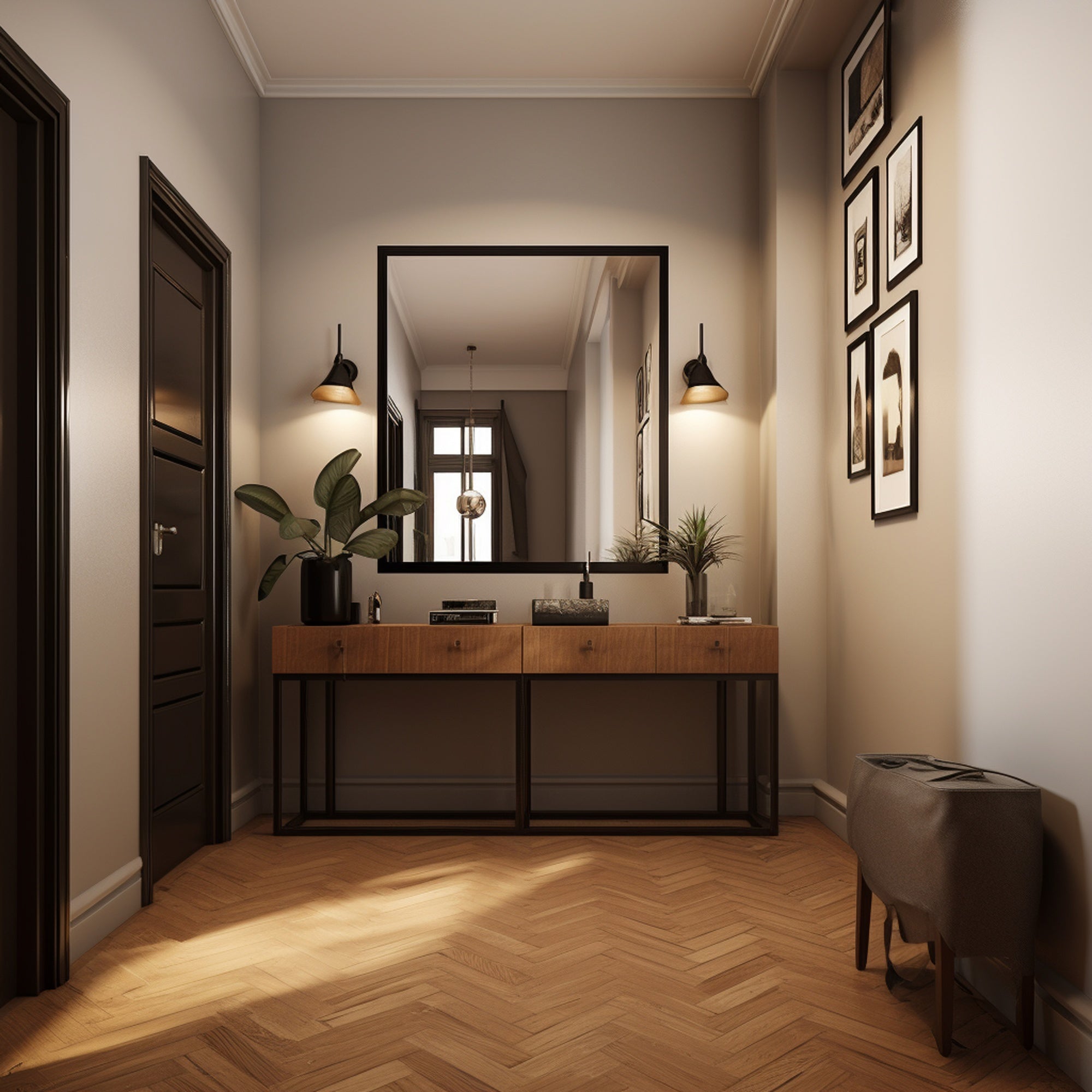
Mirrors are miracle workers in small spaces. They reflect light, create depth, and make rooms feel literally twice as large. Place mirrors opposite windows to maximize natural light reflection. Consider mirrored furniture (coffee tables, nightstands) sparingly for maximum light reflection without overwhelming.
Light Colors and Monochrome Palettes
Light colors reflect more light than dark colors, making spaces feel airier. This doesn't mean everything must be white—soft blues, warm grays, pale greens all work. Consider monochromatic color schemes (varying shades of one color) which create cohesion and eliminate visual choppiness that makes spaces feel smaller.
Strategic Lighting
Layer multiple light sources at different heights rather than relying on one overhead fixture. Table lamps, floor lamps, wall sconces, and even string lights create ambiance and make spaces feel larger by eliminating dark corners.
Creating Zones in Open Spaces
Use Rugs to Define Areas
In studio apartments or open-plan spaces, area rugs create visual boundaries between "rooms" without walls. A rug under your dining table distinguishes it from the living area even in the same physical space.
Furniture Arrangement
Float furniture away from walls to create pathways and defined zones. A sofa placed perpendicular to a wall (rather than against it) can separate living area from dining or sleeping area.
Consistent Sightlines
Whatever you see from your main vantage point should feel cohesive. If you see your bed from your living area, style it like a daybed with decorative pillows so it reads as "sofa" rather than "unmade bed."
Smart Storage Solutions
Hidden Storage
- Under-Bed Storage: Platform beds with built-in drawers or rolling bins
- Inside Ottomans and Benches: Hollow furniture that opens for storage
- Behind Doors: Over-door organizers, hooks, pocket systems
- Inside Cabinet Doors: Adhesive organizers maximize dead space
Display as Storage
Open shelving displays beautiful items while providing storage. Choose cohesive containers and organize by color or type to prevent visual chaos. Baskets, boxes, and bins in consistent materials (like woven baskets or canvas bins) keep things tidy while accessible.
Rotate Seasonally
Store off-season items elsewhere (basement, storage unit, under-bed) and rotate inventory seasonally. You don't need winter coats accessible in July or beach gear visible in December.
Decor in Small Spaces
Fewer, Larger Pieces
Instead of many small decorative items, choose fewer statement pieces. One large piece of art beats a gallery wall of tiny prints. One substantial vase beats five small ones. Large-scale items create impact without clutter.
Plants for Life and Height
Tall plants draw eyes upward and add life without taking up much floor space. Hanging plants and wall-mounted planters add greenery with zero footprint.
Consistent Style
In small spaces, visual cohesion is critical. Choose a clear style direction and stick to it. Mixing too many styles in a small space feels chaotic.
What to Avoid
- Heavy Curtains: They close in spaces. Choose light, sheer fabrics when possible
- Dark Walls: Unless done very intentionally with tons of light, dark walls shrink spaces
- Clutter: This seems obvious, but the smaller the space, the more disciplined you must be
- Bulky Furniture: Oversized sectionals or heavy furniture overwhelm small rooms
- Pattern Overload: Too many competing patterns create visual noise in tight quarters
Conclusion:
Small space living requires thoughtfulness, but the constraints can actually improve design by forcing intentionality. Every choice matters more, which means every choice is more meaningful. Embrace the challenge, apply these strategies, and you'll create a small space that lives large.
CTA: Explore our space-saving decor and multi-functional pieces designed for stylish small-space living.